
What we do
Driveways
New driveways, and tear-out-and-replace on the ones that have finally given up. We haul the old one away and rebuild the base, because the base is why it failed.
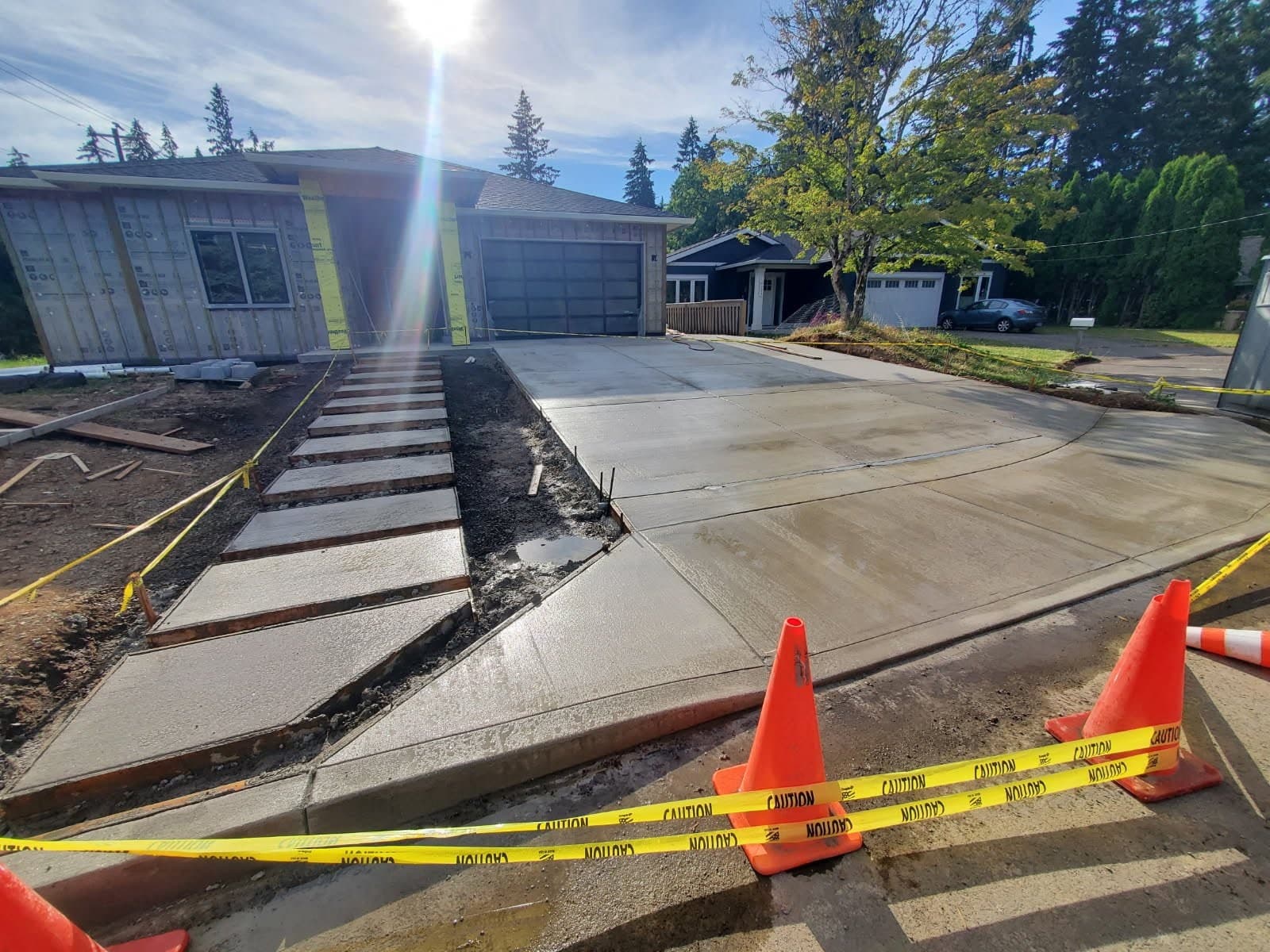
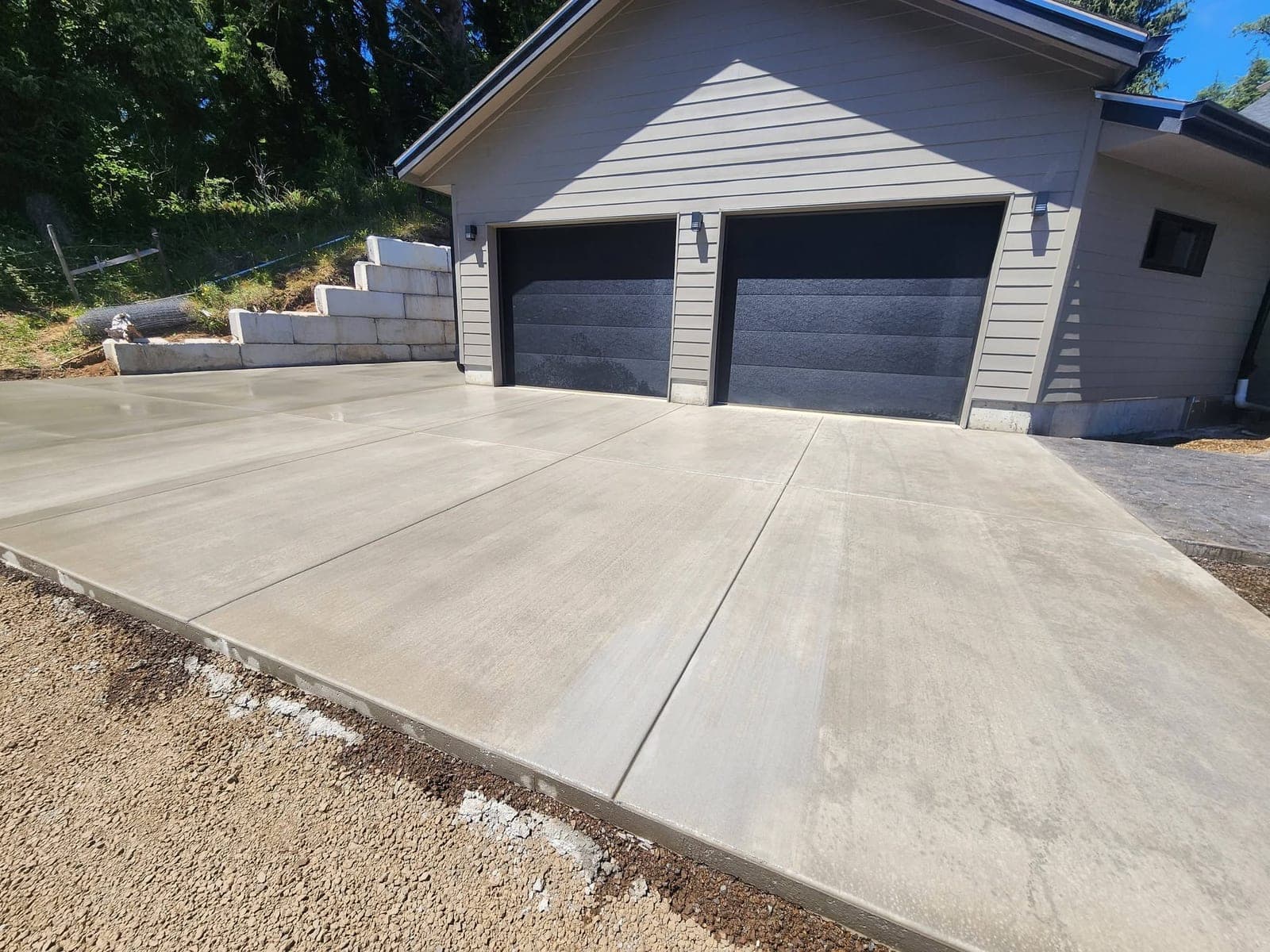
There are two driveway jobs and they are not the same conversation. A new driveway is a layout and drainage problem: where the water goes, where the joints land, how a truck turns without dropping a wheel off the edge. A replacement is an autopsy. When a driveway breaks into rocking slabs, spalls along a joint or settles at the apron, the concrete is rarely what failed — it is the base under it, or water that was never given anywhere to go. So on a replacement we tear it out, haul it away, and rebuild the base properly before a single yard of concrete arrives. Doing anything else is pouring a new surface onto the same problem and hoping. We pour to depth for what actually drives on it, place saw-cut control joints on a spacing that suits the slab rather than a habit, and finish broom or as you want it. Tear-out, haul-off and disposal are all priced in from the start, not billed back afterwards. Driveways are one of the jobs where being the excavator as well as the concrete contractor is worth real money to a homeowner — the machine that removes the old slab is the machine that recompacts the base, and it is here on day one either way.
What is included
- Tear-out, haul-off and disposal inside the quoted number, not added later
- The base rebuilt and compacted before the pour, because the base is what failed
- Poured to depth for the actual load, with saw-cut joints laid out to the slab
Our process
How driveway jobs run
Measure, and find out why
On a replacement the useful question is why the old one failed. We look at the breaks, the drainage and the edges, because whatever did it is still there until somebody fixes it.
Tear out and haul away
The old slab comes out and leaves the property. That is in the quote — disposal is one of the classic places a cheap driveway bid quietly is not one.
Rebuild and compact the base
Rock to depth, compacted in lifts, graded so water runs away from the house and off the slab rather than standing on it.
Pour, joint and finish
Poured to the thickness the load calls for, saw-cut on a spacing that suits the slab, and finished broom or to whatever you asked for. We tell you when you can drive on it before we leave.
Our work
Recent driveway work
Same ground, twice
One surface, photographed twice
 Before
 After
After Before wash
 After wash
 Before
 After
AfterQuestions
Questions about driveway work
Sometimes, and we will tell you honestly which one you are looking at. An overlay on a slab that is structurally sound and draining properly can be a good buy. An overlay on a slab that is rocking, settling or cracked through is money spent twice, because the new surface inherits every problem underneath it.
Foot traffic is generally fine after 24 to 48 hours depending on the weather. Keep cars off for a full 7 days, and keep anything heavy — an RV, a loaded truck, a dumpster, a moving van — off for 28 days, which is when a standard mix reaches its rated strength. We give you the timeline for your slab and your mix before we leave the site.
Concrete moves, and control joints exist so it cracks where we put the joint instead of somewhere you have to look at. What is avoidable is the other kind — the settling, rocking and edge failure that comes from a base that was never right. That is the part we control, and it is the reason we rebuild the base rather than pour over it.
Get a free on-site estimate
Tell us what you are looking at and we will come and measure it. No obligation, no pressure, and a written itemised quote rather than a number on the back of a card. We usually respond the same day.
Call (503) 840-8634- Hours
- Mon - Fri 7:00 AM - 6:00 PM
- Licensing
- Licensed • Bonded • Insured • CCB #251334
- Response time
- We usually respond the same day.